How to Write a Web Development Brief for a White Label Partner

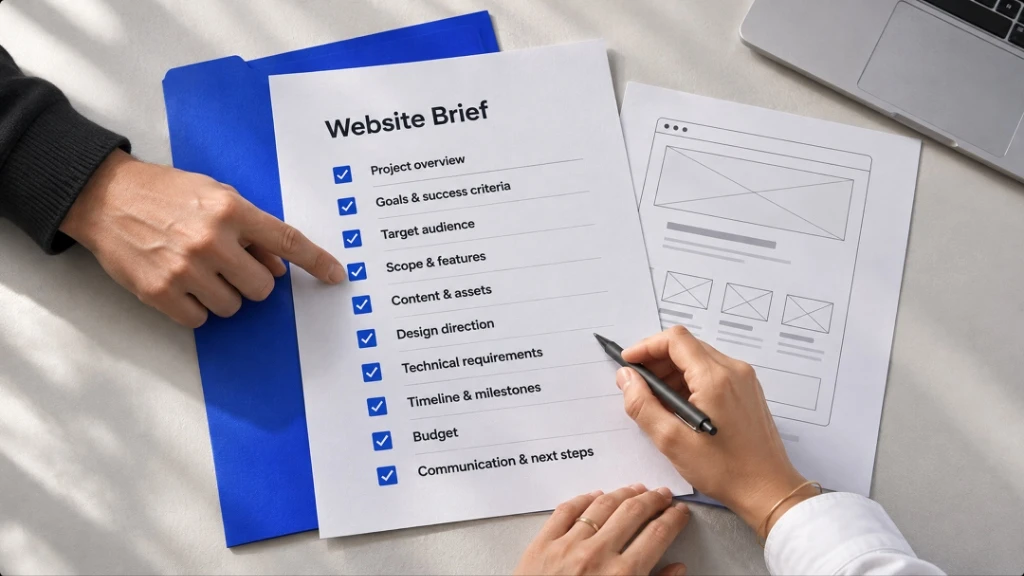
A web development brief is a short document that tells your development partner what the client needs built, why, by when, and how you’ll know it’s done. Written well, it lets a partner quote a fixed price and start work without a long back-and-forth. Written badly, it produces a padded quote, a slipping deadline, or a disagreement about what was included. This guide covers what to put in a brief, a template to copy, and the mistakes behind most scope disputes.
Key takeaways
- A good brief gives your partner enough to quote a fixed price and start building without rounds of clarifying calls.
- Cover nine things: snapshot, goals, scope, design, platform and technical needs, content, timeline, approvals, and handover.
- Count unique templates, not just pages. Templates drive effort more than page count does.
- Replace vague phrases (“modern,” “a few pages”) with numbers, references, and dates.
- The brief is also what the finished site is tested against, so write it as if every line will be checked.
What is a web development brief?
A web development brief is the written description of a website project that an agency hands to its development partner. It differs from a creative brief, which sets brand and campaign direction, and from a client’s wish list, which is usually informal. The development brief turns both into things a developer can build: pages, templates, features, platforms, content, and dates.
With a white label partner, you write the brief on your client’s behalf, and the partner never speaks to the client. That makes the brief the only source of truth. Any gap you leave won’t be filled by a quick conversation with the client.
Why a better brief gets a better quote
-
A fixed price needs a fixed scope. A partner can only hold a price if the scope is clear.
-
Fewer change requests. Many “changes” are things nobody wrote down.
-
A faster start. There's no waiting through rounds of questions.
With a thin brief, a careful partner pads the quote to cover unknowns, and a careless one underquotes and the gap shows up later. Neither helps your margin.
What to include in a web development brief
-
1.
Project snapshot
Client name (or a code name if confidential), industry, what the site is for, the current URL if there is one, and who it needs to reach. One paragraph is enough.
-
2.
Goals and success measures
State what the site must achieve (leads, bookings, sales, credibility) and how it will be judged. “Increase enquiries” is a goal. “Contact form submissions tracked in GA4” is a measure. This shapes technical choices such as forms, tracking, and performance work.
-
3.
Scope: pages, templates, and features
List every page, then group them into unique templates (home, service, blog post, and so on). Effort follows the number of unique templates more than the number of pages: 30 pages on four templates is far less work than 10 pages on 10 templates. Then list features such as forms, search, filters, e-commerce, booking, multilingual support, or member areas.
-
4.
Design status
Say whether designs are approved, in progress, or not started. If they exist, link the Figma file and note which pages and breakpoints are covered. Add two or three reference sites and what you like about each.
-
5.
Platform and technical requirements
-
6.
Content and assets
Say who writes the copy and who supplies images, video, and logos, with due dates and formats. For a migration, state how many pages, posts, or products are moving and whether URLs must stay the same.
-
7.
Timeline and milestones
Give the launch date and the reason for it (a campaign, an event). List any fixed milestones and how many days your client needs to review each stage. Slow client review is one of the most common causes of delay, so build it into the schedule.
-
8.
Approvals and changes
Name one person who signs off. State how many revision rounds are included, how feedback arrives (one consolidated list, not scattered emails), and how out-of-scope requests are handled.
-
9.
Handover and after launch
Say who hosts the site, who owns accounts and files, whether the client’s team needs training, and who will maintain the site. Our guide on white label website maintenance covers the last point.
Vague vs. specific: examples
These are illustrations of the kind of change that makes a brief quotable.
| Vague | Specific |
|---|---|
| “A modern, clean site” | Two reference sites plus notes on layout, type, and colour |
| “A few pages” | 12 pages using four unique templates |
| “A standard contact form” | A six-field form that sends to the client's CRM, with spam protection |
| “Launch soon” | Launch on a named date, ahead of a campaign, with five days for client review |
| “Same as the old site” | Migrate 120 blog posts, keep current URLs, provide a redirect map |
Six mistakes that cause scope disputes
-
1.
Forwarding the client's email as the brief.
Raw client emails mix goals, opinions, and half-decisions. Translate them first.
-
2.
Counting pages but not templates.
Two projects with the same page count can differ several times over in effort.
-
3.
Leaving content responsibility unclear.
Late or missing content is a top cause of missed launches.
-
4.
Having several approvers.
Conflicting feedback restarts work. Name one person.
-
5.
Mixing must-haves with nice-to-haves.
Mark which is which, so tradeoffs are quick.
-
6.
Not defining “done.”
If launch criteria aren’t written down, they get invented at the end.
What happens when you send us a brief
When you send a brief to DevOut Labs, you get a fixed quote back within one business day, and the price only changes if the scope does. If the brief is rough, our project manager helps turn it into clear requirements before work starts. The finished site is then tested three times against your brief, so every line you write is a line we check. If you’re still deciding on a partner, start with our guide on how to choose a white label web development partner, or send us a brief to see how it works in practice.
Frequently asked questions
Nine things: a project snapshot, goals and success measures, scope (pages, templates, features), design status, platform and technical requirements, content and assets, timeline, approvals and changes, and handover.
Long enough to remove guesswork, and no longer. One to three pages covers many projects. Complex builds need more. Completeness matters more than length.
The agency. Your client supplies needs and preferences, and you turn them into a document a developer can build from. Don’t forward raw client emails to your partner.
No. State the design status honestly, whether approved, in progress, or not started, and the partner can quote accordingly. Quoting is more accurate once designs exist.
Yes. A rough brief still starts the conversation, and a project manager can help fill gaps. The more detail you include, the firmer the quote will be.